
TL;DR:
- The NSW Model Code of Conduct Administrative Framework is mandatory for councils and local government entities in NSW to adopt, ensuring compliance with the law. Human services organizations must align their sector-specific codes, such as the NDIS or aged care standards, with the framework while maintaining clear responsibilities. Preparing and documenting independent review processes, training, and reporting structures before complaints arise is essential for effective governance and compliance.
If your organisation has any council-facing activity or operates as a local government entity in NSW, the NSW Model Code of Conduct Administrative Framework is not optional. Under section 440 of the Local Government Act 1993, every council and joint organisation must adopt a code that incorporates the Model Code. Where an adopted code conflicts with the Model Code, the Model Code prevails. For human services boards operating across NDIS, aged care, child safety or community services, the practical question is not whether the framework applies but how to align it with your sector's primary legislative obligations without creating gaps or contradictions.
Your immediate board actions:
- Confirm whether your organisation's activities trigger the Local Government Act 1993 obligations or whether a sector code (NDIS Act 2013, ACNC Governance Standards) is primary.
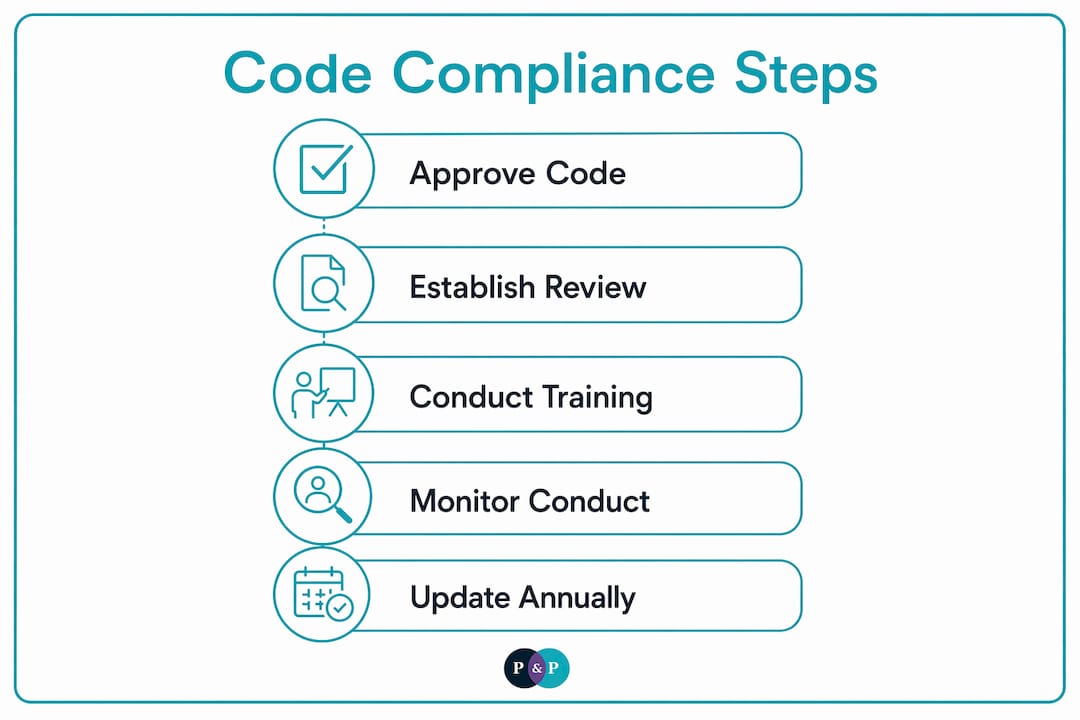
- Approve a board-level code of conduct with documented legal basis.
- Establish independent conduct reviewer arrangements and appoint a complaints coordinator.
- Mandate workforce training, including the Quality, Safety and You module for NDIS workers.
- Set a quarterly compliance reporting rhythm to the board.
Which sector codes apply and when
The Model Code is a local government instrument. Human services organisations must maintain distinct or clearly integrated codes so that council-related activities sit under a Model Code-based document, while service delivery is governed by the relevant sector code. The NDIS Code of Conduct applies to all providers and everyone they engage, including unregistered providers, contractors and volunteers. Boards are accountable for the conduct of every person engaged by the organisation. The Aged Care Quality Standards (Strengthened), National Principles for Child Safe Organisations, and ACNC Governance Standards each carry their own compliance obligations and sit alongside, not beneath, the Model Code. Governance experts consistently caution against borrowing local government wording wholesale; your code must reference the legislation that actually governs your service delivery.
What the administrative framework requires boards to approve
Sections 440(4) and 440AA(4) of the Local Government Act 1993 create an automatic override: if a council fails to adopt compliant documents, the Model Code's provisions apply directly. The administrative framework your board must approve includes:
- A panel of conduct reviewers with documented selection criteria, independence declarations and terms of engagement.
- A complaints coordinator role, independent of the general manager, who also acts as the nominated disclosures coordinator under the Public Interest Disclosures Act 1994.
- Preliminary assessment and investigation processes with natural justice safeguards at every stage.
- An incident register, audit trail and annual reporting cycle.
- Conflict of interest declarations with clear recusal and record-keeping requirements.
- A gifts and benefits policy; OLG guidance sets a cap on gifts, though councils may retain a lower threshold.
Post the Cornish v Secretary decision, conduct reviewers hold clearer independent authority and disciplinary pathways include censure and referral to the OLG or other regulators. Your board should document escalation thresholds and decision rights now, before a complaint tests the framework.
Workforce scope, training and the NDIS Code of Conduct
Boards commonly underestimate how far workforce conduct obligations extend. The NDIS Code of Conduct covers registered and unregistered providers alike, and your board is accountable for everyone the organisation engages. Unclear contract clauses and inconsistent induction processes are where compliance gaps most often appear. Every worker must complete the Quality, Safety and You module; registered providers must treat it as mandatory. Your NDIS registered provider governance framework should link training completion records directly to the board's quarterly compliance report. Effective employee engagement strategies during code rollout also reduce the risk of staff treating training as a tick-box exercise.

A 90-day adoption checklist
OLG guidance has historically set six-month adoption windows and directs councils to act as soon as possible when updates are prescribed. For human services boards, a 90-day adoption sprint is realistic:
- Days 1–30: Legal review of current code against Model Code and sector obligations; stakeholder mapping (staff, contractors, volunteers, clients).
- Days 31–60: Draft revised code and procedures; board workshop; integrate with HR, privacy, complaints and NDIS policies without diluting sector obligations. Boards may add more onerous requirements but cannot reduce the Model Code's minimum standards.
- Days 61–90: Board approval; issue notice to all staff, contractors and volunteers; launch training; activate incident register and reporting cycle.
Practice example
A mid-sized disability services NFP in regional NSW received a complaint about a senior manager's conduct during a participant interaction. Because the board had not formalised its conduct reviewer panel, the CEO had to manage the preliminary assessment, creating a conflict of interest. The board convened an emergency meeting, appointed an external independent reviewer under an interim arrangement, and the investigation proceeded with natural justice protections in place. The outcome: a finding of misconduct, a formal censure, and a referral to the NDIS Commission. The board's post-incident review produced a standing panel of three independent reviewers, a complaints coordinator role separated from the executive, and a quarterly reporting template. The NFP board governance lesson here is that the framework only protects you when it exists before the complaint arrives.
Peer question for your next board meeting: Does your current code of conduct clearly identify who investigates a complaint involving a senior leader, and does that person have documented independence from the executive?
How The Planning and Practice Hub supports boards with code compliance
The Planning and Practice Hub works with CEOs and boards across Australia's human services sector to draft, align and operationalise conduct frameworks that hold up under scrutiny. Rachel Willis brings close to three decades of firsthand experience across more than 50 regulatory bodies, which means the advice you receive is grounded in what regulators actually look for, not what a generic template assumes.
- Code drafting and legal alignment against the Local Government Act 1993, NDIS Act 2013 and sector-specific standards.
- Independent conduct reviewer sourcing and panel establishment.
- Board workshops on investigation mechanics, natural justice and conflict of interest controls.
- Integration of Quality, Safety and You training into induction and refresher programmes.
- Compliance reporting templates and audit support for quarterly board oversight.
The Hub provides independent advice and can assist in appointing independent conduct reviewers where required, preserving the separation your framework depends on. A governance health-check and draft code typically takes four to six weeks depending on scope. Contact The Planning and Practice Hub through our human services consulting page to discuss your board's immediate priorities.
Key takeaways
The NSW Model Code of Conduct Administrative Framework requires boards to approve a legally grounded code, establish independent reviewer arrangements, and maintain documented training and reporting before a complaint tests the system.
| Point | Details |
|---|---|
| Legal basis is non-negotiable | Section 440 of the Local Government Act 1993 mandates adoption; the Model Code overrides any inconsistent provisions automatically. |
| Sector codes run in parallel | NDIS Code of Conduct, Aged Care Quality Standards (Strengthened) and ACNC Governance Standards each carry independent obligations alongside the Model Code. |
| Workforce scope is broader than most boards assume | The NDIS Code of Conduct covers contractors and volunteers, not just employees; contract clauses and induction records must reflect this. |
| Independent reviewers protect the board | A standing panel with documented independence declarations and escalation thresholds is required before a complaint arrives, not after. |
| The Planning and Practice Hub | Supports boards to draft, align and operationalise compliant conduct frameworks, including independent reviewer arrangements and training integration. |
FAQ
Does the NSW Model Code apply to non-council human services organisations?
The Model Code is a local government instrument under the Local Government Act 1993. Non-council human services organisations are not directly bound by it, but must maintain a board-approved code aligned to their primary sector legislation, such as the NDIS Act 2013 or ACNC Governance Standards.
Who must follow the NDIS Code of Conduct?
The NDIS Code of Conduct applies to all registered and unregistered NDIS providers, their key personnel, and every worker or contractor they engage, making board-level oversight of the entire workforce a direct compliance obligation.
What happens if a council fails to adopt a compliant code?
Under sections 440(4) and 440AA(4) of the Local Government Act 1993, the Model Code's provisions automatically override any inconsistent provisions in the council's adopted code, removing the organisation's ability to rely on its own document.
How often should a board review its code of conduct?
Boards should review their code whenever the relevant legislation or sector standards are updated, and at minimum annually, to capture changes such as OLG procedure amendments or updates to the NDIS Practice Standards.
What is the Quality, Safety and You training module?
Quality, Safety and You is an online orientation module explaining workers' obligations under the NDIS Code of Conduct from a participant's perspective; it is mandatory for staff of registered NDIS providers and recommended for all workers delivering NDIS supports.