
TL;DR:
- Australia's new aged care regulation replaces periodic audits with continuous oversight based on providers' risk levels. Boards must demonstrate real-time risk management and focus on outcomes, not just policies, to meet strengthened standards. Proactive governance engagement influences regulatory responses and enhances community trust.
Australia's aged care sector operates under a rights-based, continuous oversight model that calibrates regulatory responses to the level of operational risk each provider presents. The Aged Care Act 2024 introduced aged care risk-based regulation from 1 november 2025, replacing periodic audits with continuous oversight by the Aged Care Quality and Safety Commission (ACQSC). For boards and executives, this is not a compliance update. It is a structural shift in how accountability works, and it demands a different kind of governance leadership.
How does aged care risk-based regulation work?
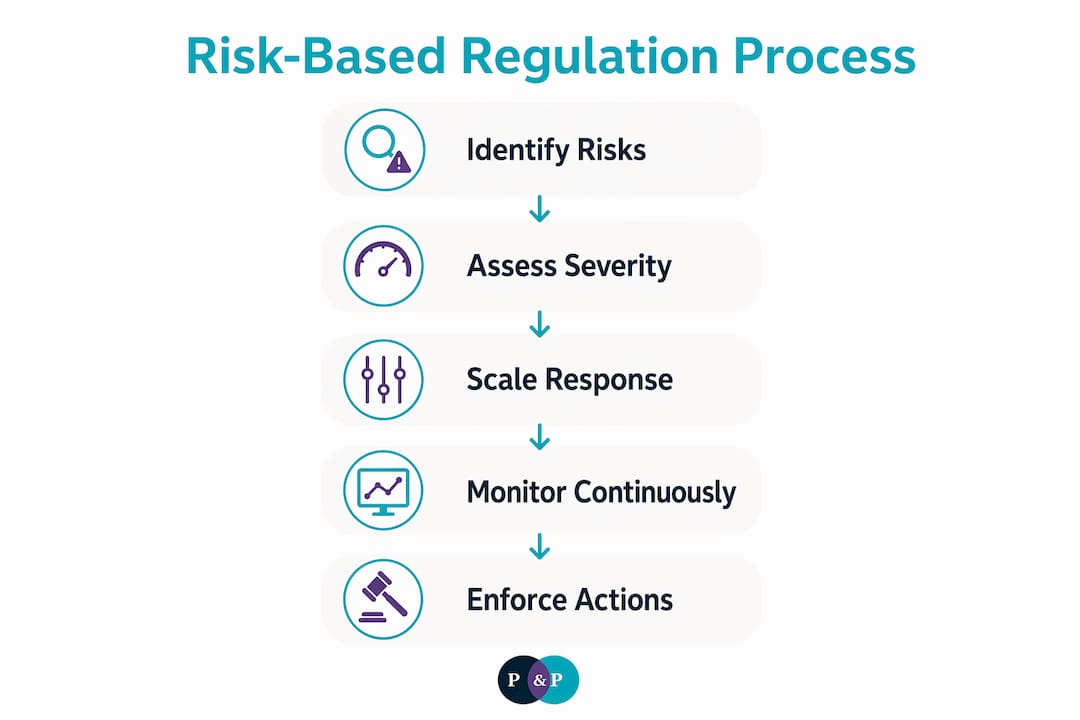
The new model rests on universal provider registration, which replaces the fragmented approval arrangements that existed before november 2025. Every registered provider sits within one of six registration categories, determined by service type, complexity, and risk profile. Your category determines which of the Aged Care Quality Standards (Strengthened) apply to you and at what level of scrutiny.
The ACQSC assesses conformance using a four-point graded scale:
- Conformance: meeting the standard as expected
- Minor non-conformance: isolated gaps that require attention
- Major non-conformance: systemic failures that trigger proportionate enforcement
- Exceeding: demonstrated excellence across governance, clinical outcomes, and partnerships with older people
The graded assessment method means that the regulator's response scales with the severity and persistence of the risk. Low-risk issues attract supported improvement. Higher or persistent risks attract conditions on registration or stronger enforcement action. Multi-category providers face consolidated requirements, which simplifies some obligations but raises the governance stakes considerably.
Pro tip: Map your registration category against each Quality Standard obligation before your next board meeting. Gaps between your category's requirements and your current governance reporting are your highest-priority risk.

What are the governance obligations under the strengthened Quality Standards?
Quality Standards 1 and 2 carry the heaviest governance weight. Standard 1 addresses the rights and dignity of older people. Standard 2 addresses the governing body's accountability for setting strategic priorities, promoting a safety culture, and building active partnerships with older people. Both standards are outcome-focused, which means documentation of processes is no longer sufficient evidence of compliance.
Good governance boards need to witness and evidence the lived experiences of older people, not just rely on policy documentation. Compliance success is judged by the realisation of older people's rights in practice, reinforcing dignity, choice, and culturally safe care.
This is a meaningful shift for boards. The ACQSC expects governing bodies to demonstrate that quality improvements are tangible and traceable to the experiences of residents and clients. That requires boards to receive qualitative evidence, not just dashboard metrics. It also means that governance maturity directly influences the Commission's risk perception of your organisation.
Providers who show proactive engagement with identified risks tend to receive supportive regulatory responses. Providers who ignore minor risks, even unintentionally, can trigger escalated enforcement because the Commission reads inaction as evidence of poor governance culture.
How do you operationalise risk-based compliance day to day?
The ACQSC is no longer an auditor. It is a continuous monitor using enhanced tools to detect and respond to emerging risks in real time. That changes what good operational governance looks like.
Effective risk management in elderly care now requires integrating multiple data streams into a single governance view. The following sequence works well in practice:
- Collect: Gather resident feedback, staff experience data, complaints, and incident reports into one system rather than separate silos.
- Analyse: Review this data at least monthly at the operational level and quarterly at the board level, looking for patterns rather than isolated events.
- Report: Present risk-flagged themes to the governing body with a clear narrative about what is being done and by whom.
- Respond: Document the response, including timelines and accountabilities, so that the ACQSC can see a clear chain of governance action if it asks.
- Review: Close the loop by reporting outcomes back to the board, confirming whether the risk was resolved or requires escalation.
One aged care provider I worked with had strong incident reporting at the operational level but no mechanism to surface patterns to the board. The board was making strategic decisions without visibility of a recurring medication management issue that had generated three complaints over six months. Once a simple governance reporting dashboard was introduced, the board identified the pattern, commissioned a clinical review, and resolved the issue before it attracted regulatory attention. That is what real-time risk visibility looks like in practice.
Pro tip: Ask your quality team to present the top three risk themes from complaints and incidents at every board meeting. If they cannot do that in five minutes, your reporting architecture needs attention.
What happens when the ACQSC escalates enforcement?
The ACQSC's Monitoring Policy guides proportionate action based on risk assessment. The goal is to improve older people's experience, not to punish providers unnecessarily. That said, the graduated response strategy moves quickly when governance maturity is in question.
Enforcement triggers and responses follow this pattern:
- Minor non-conformance: The Commission expects a provider-led improvement plan with clear timelines. Proactive submission of this plan signals governance competence.
- Major non-conformance: Conditions on registration apply. These are publicly visible on the provider register, which creates reputational risk alongside the regulatory one.
- Persistent risk: The Commission escalates to stronger enforcement powers, including suspension or banning orders for individuals, where governance failure is the root cause.
The public provider register is a significant accountability mechanism. Registration and compliance details are visible to older people, families, and the community. For multi-category providers, a compliance failure in one service type can affect community confidence across all services. Boards need to treat regulatory engagement as a leadership function, not an administrative one. Preparing a compliance response plan before you need it is not overcaution. It is sound governance.
Key takeaways
Aged care risk-based regulation requires boards and executives to treat quality oversight as a continuous leadership responsibility, not a periodic compliance event.
| Point | Details |
|---|---|
| Continuous oversight replaces audits | The ACQSC monitors providers in real time, so compliance must be an ongoing operational priority. |
| Registration category sets obligations | Your category determines which Quality Standards apply and at what level of regulatory scrutiny. |
| Governance maturity shapes regulatory response | Proactive risk engagement attracts support; inaction on minor risks can trigger escalated enforcement. |
| Outcomes evidence is non-negotiable | Boards must receive qualitative evidence of residents' lived experience, not just process documentation. |
| Public register creates reputational accountability | Compliance conditions are publicly visible, making regulatory performance a community trust issue. |
What I have seen change, and what still needs to
The providers who are adapting well to this model share one characteristic: their boards stopped treating compliance as something that happens to them and started treating it as something they lead. That sounds straightforward. In practice, it requires boards to ask harder questions of their executives, to sit with uncomfortable data, and to make decisions before the regulator asks them to.
What I still see too often is a governing body that receives a quality report full of green indicators, asks no questions, and moves on. The strengthened Quality Standards make that posture genuinely risky. The Commission expects boards to demonstrate that they understand the quality and safety profile of their organisation at a granular level. If your board cannot articulate the top three risks facing your residents this quarter, that is a governance gap worth addressing now.
The cultural shift from compliance as event to compliance as leadership is the real work of this reform. External compliance advice can accelerate that shift, particularly for boards that are new to the strengthened standards or managing complex multi-category registrations.
What question is your board asking that it was not asking twelve months ago?
— Rachel
Working with The Planning and Practice Hub on regulatory readiness
Aged care executives and board directors working through the 2025 regulatory model changes often find that the governance and compliance questions are the hardest to answer from the inside.
The Planning and Practice Hub works with aged care providers across governance, compliance, and risk management to build the internal capability that the ACQSC expects to see. Rachel Willis brings nearly three decades of sector experience, including direct work with the strengthened Quality Standards and the new registration framework. Whether your organisation needs a governance review, a risk reporting architecture, or support preparing for regulatory engagement, The Planning and Practice Hub offers management consulting services built specifically for Australia's human services sector.
FAQ
What is aged care risk-based regulation in Australia?
Aged care risk-based regulation is the continuous, proportionate oversight model introduced under the Aged Care Act 2024 from 1 november 2025. The ACQSC monitors all registered providers in real time and calibrates its regulatory response to the level of risk each provider presents.
How does the ACQSC assess compliance under the new model?
The ACQSC uses a four-point graded scale: conformance, minor non-conformance, major non-conformance, and exceeding. The grade determines the regulatory response, from supported improvement through to conditions on registration or stronger enforcement.
What do boards need to demonstrate under the strengthened Quality Standards?
Boards must demonstrate active governance of quality and safety, including evidence of older people's lived experiences, not just policy documentation. Standard 2 holds governing bodies directly accountable for strategic priorities and safety culture.
How does governance maturity affect regulatory outcomes?
Providers who engage proactively with identified risks tend to receive supportive regulatory responses. Ignoring minor risks signals poor governance culture and can trigger escalated enforcement.
What data should providers integrate for risk-based compliance?
Providers should integrate resident feedback, staff experience data, complaints, and incident reports into a single governance reporting view. This supports early risk identification and demonstrates the real-time oversight the ACQSC expects.