
TL;DR:
- The age care governance information gap stems from poor data design and integration, not a lack of data.
- Closing this gap requires reforming how clinical, HR, and complaints data are combined into actionable insights for boards.
The frontline governance information gap in aged care describes the disconnect between what happens at the point of care and what boards and executives actually see when making decisions. This gap is not a data shortage problem. It is a design and integration failure, and the Strengthened Aged Care Quality Standards make it a compliance liability. The Aged Care Quality and Safety Commission has escalated enforcement significantly, and providers who cannot demonstrate verifiable information flows from frontline to board are increasingly exposed. Understanding where the gap sits, and what closes it, is the practical work of governance right now.
How does the frontline governance information gap manifest?

The gap shows up in three predictable places: medication records, shift handovers, and siloed data systems. Each one creates a different kind of blind spot for boards.
Medication information fragmentation produces a 72.6% discrepancy rate during care transitions. That figure represents avoidable harm at scale, not a rounding error in a quality report. The same research identifies a failure of digital system interoperability as the structural cause. Software exists, but the systems do not speak to each other, and the implementation support is inadequate.
Shift handovers present a different problem. Most facilities produce process records confirming that a handover occurred. They do not produce verifiable handover content linked to clinical records. ISBAR frameworks are widely used, but ISBAR alone does not create an evidentiary record of what was communicated. When a complaint or incident investigation follows, the governance exposure is significant.
The third manifestation is siloed data. HR data, clinical incident data, and complaints data sit in separate systems with no integration. A board reviewing these in isolation misses the pattern that connects them. Consider a medium-sized residential provider where three separate complaints about night shift care arrived over six weeks. Each was reviewed individually by the quality team and closed. No one connected them to a concurrent spike in unplanned leave among night staff. The board never saw the combined picture. That is the information gap in practice.
- Medication records fragmented across dispensing, clinical, and hospital systems
- Handover documentation confirming process but not content
- HR, clinical, and complaints data held in separate, non-integrated systems
- Board reports summarising outcomes without upstream signals
Pro Tip: Map your data flows from the point of care to the board report. Identify every handoff where information is summarised, filtered, or lost. That map will show you exactly where your governance exposure sits.
What does the evidence say about governance insight gaps?
The numbers are direct. 50.6% of board-connected professionals report that governance insights exist within their organisations but are too fragmented to act upon. That is not a minority view. It is the majority experience of people who sit closest to governance decisions.
Boards often conflate lagging indicators with governance quality. They see incident counts and financial ratios and conclude they have oversight. What they are missing are the upstream signals: frontline staff sentiment, communication quality, and the behavioural patterns that precede incidents. By the time a metric moves, the governance failure has already occurred.
The Aged Care Quality and Safety Commission issued 34 banning orders and investigated 130 providers for Code of Conduct breaches in the most recent reporting period. That enforcement intensity reflects a regulator with better data than most providers have about themselves. The Commission triangulates complaints, incidents, and financial reports to build risk profiles that providers cannot see from their own siloed systems. Providers who lack data integration are effectively operating without the visibility the regulator already has. That asymmetry is a serious liability under the Strengthened Aged Care Quality Standards.
The governance gap analysis process for Australian NFPs is a practical starting point for any board that wants to understand its current exposure before the Commission does.
Governance best practices to close the information gap
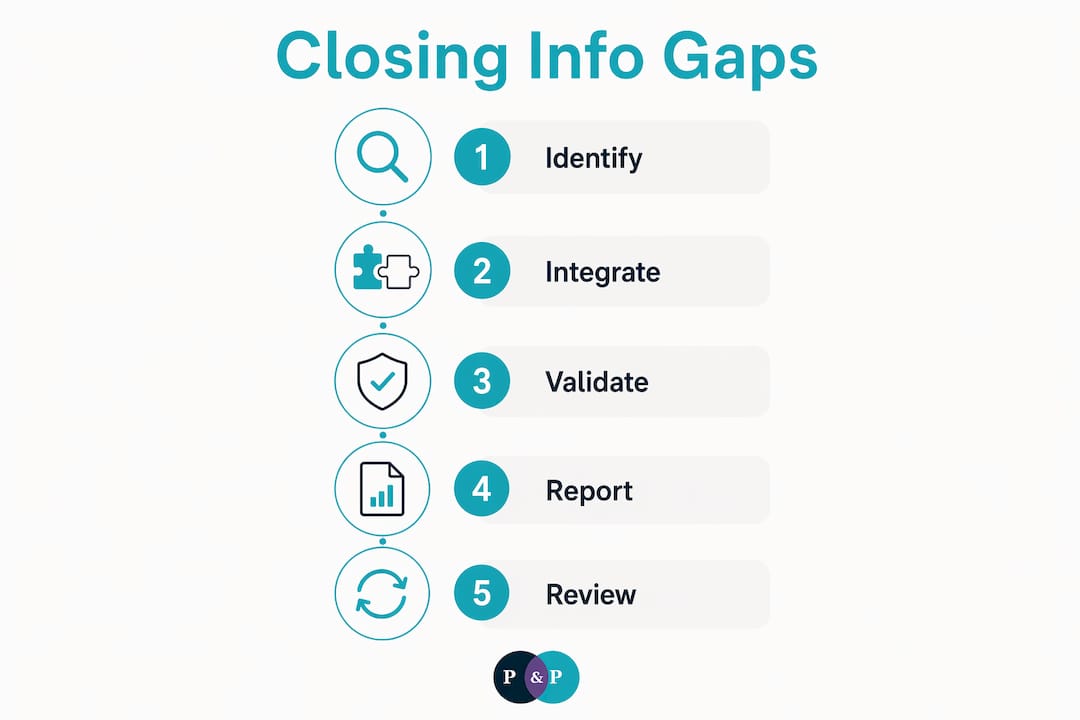
The most direct fix is reducing what boards are asked to read. Boards overwhelmed by 40–80 page financial packs consistently miss the quality and safety signals buried within them. The recommendation from current practice is to reduce reporting to 12 actionable KPIs that prioritise quality and safety outcomes over accounting metrics. Fewer numbers, better chosen, produce better governance.
The second fix is integrating clinical, HR, and complaints data into a single governance view. This is not a technology purchase. It is a design decision about what information the board needs and how it gets there. The integration work sits with the executive team, not the IT department.
| Practice area | What good looks like |
|---|---|
| Board reporting | 12 KPIs covering quality, safety, workforce, and complaints |
| Handover documentation | Verifiable content records linked to clinical notes, not just process confirmation |
| Data integration | Single governance dashboard drawing from clinical, HR, and complaints systems |
| Governance culture | Operational pressure recognised as a risk variable, not just a management problem |
| Early warning signals | Frontline staff sentiment and communication quality tracked alongside incident data |
Verifiable shift handover records are the most underrated governance tool in aged care. ISBAR frameworks alone do not meet evidentiary standards. Governance systems need independent capture of handover content linked to clinical records. This is a documentation design question, and it has a direct answer.
Pro Tip: Ask your quality team to pull the last ten incident investigations and check whether verifiable handover records were available for each one. The answer will tell you more about your governance exposure than any board report.
Boards also need to recognise operational pressure as a governance variable. Sustained pressure on frontline staff shapes leadership behaviour and care outcomes before any metric reflects it. A board that understands this builds a governance culture that looks for behavioural signals, not just numbers.
Practical steps for policymakers and practitioners
Closing the information gap requires deliberate design at the system level. These steps apply whether you are a board director, a quality manager, or a policymaker setting standards.
- Audit your current data flows. Map every point where frontline information is summarised, filtered, or lost before it reaches the board. This audit is the foundation of any improvement.
- Integrate My Health Record into your medication management process. The national platform exists and supports real-time, standardised data sharing. Providers not using it are accepting unnecessary medication risk.
- Redesign board reporting around 12 KPIs. Remove financial detail from the governance pack and replace it with quality, safety, workforce, and complaints metrics that require a decision or response.
- Implement verifiable handover documentation. Move beyond ISBAR process confirmation to content records that link to clinical notes and can withstand evidentiary scrutiny.
- Build a cross-functional governance team. Connect clinical, compliance, and governance roles in a regular forum that reviews integrated data, not separate reports. This is where the pattern recognition happens.
- Train boards on governance metrics. Directors need to understand what the data means and what questions to ask. This is not optional under the Strengthened Aged Care Quality Standards.
The aged care governance obligations guide for executives covers the specific expectations boards now face under the current regulatory framework.
Key takeaways
The frontline governance information gap in aged care is a design failure, not a data shortage, and closing it requires integrating clinical, HR, and complaints data into a governance view that boards can actually act on.
| Point | Details |
|---|---|
| Gap is structural, not technical | The problem is poor data design and integration, not a lack of available information. |
| Medication risk is measurable | A 72.6% discrepancy rate during care transitions signals a system-level failure requiring urgent attention. |
| Boards lack upstream signals | 50.6% of board-connected professionals report insights are too fragmented to act upon. |
| Enforcement is intensifying | The Aged Care Quality and Safety Commission issued 34 banning orders and investigated 130 providers in one reporting period. |
| Verifiable records are non-negotiable | ISBAR process confirmation does not meet evidentiary standards; content records linked to clinical notes are required. |
What I have learned about governance visibility in aged care
After nearly three decades working across Australian human services, the pattern I see most consistently is this: boards believe they have oversight because they receive reports. They do not. They have summaries of summaries, filtered through layers of management that each make decisions about what is worth escalating.
The governance failures I have worked through with clients almost never start with a single dramatic event. They start with sustained operational pressure that nobody names as a governance risk. A facility running short-staffed for six months, a clinical manager covering two roles, a complaints process that closes tickets without connecting them to workforce data. Each of these is a governance signal. None of them appear in a standard board pack.
The compliance versus governance distinction matters enormously here. Procedural compliance is not governance quality. A provider can tick every box on a self-assessment and still have a board that cannot see what is actually happening at the point of care.
What I find works is starting with the data flow audit, not the reporting redesign. You cannot fix what you cannot see. Once a board understands where information is being lost or filtered, the motivation to redesign the system is immediate. The question I would put to you is this: if the Commission built a risk profile of your organisation today using your own data, what would it show that your board has not seen?
— Rachel
How The Planning and Practice Hub works with aged care governance
The Planning and Practice Hub works with aged care boards, executives, and quality teams to close the governance and information gaps that create regulatory exposure.
Rachel Willis and the team at The Planning and Practice Hub bring close to three decades of sector experience to aged care governance consulting, including board reporting redesign, data integration frameworks, handover documentation standards, and cross-functional governance team development. The work is co-developed with each client, grounded in the specific regulatory obligations of the Strengthened Aged Care Quality Standards. If your board is working with fragmented data or cannot demonstrate verifiable information flows from frontline to governance, contact The Planning and Practice Hub to discuss what a practical improvement process looks like for your organisation.
FAQ
What is the frontline governance information gap in aged care?
The frontline governance information gap in aged care is the disconnect between information generated at the point of care and the insights available to boards and executives for governance decisions. It is primarily a failure of data design and integration, not a shortage of data.
Why do aged care boards miss early warning signals?
Boards typically receive lagging indicators such as incident counts and financial ratios, which reflect problems that have already occurred. Upstream signals like frontline staff sentiment and communication quality are rarely captured in standard board reporting.
What does verifiable handover documentation require?
Verifiable handover documentation requires independent capture of the content communicated during a shift handover, linked to clinical records. ISBAR process confirmation alone does not meet evidentiary standards under current aged care compliance requirements.
How does the Aged Care Quality and Safety Commission detect provider risk?
The Commission triangulates complaints, incident reports, and financial data to build provider risk profiles independently of what providers report. Providers with siloed data systems are often unaware of the risk picture the Commission already holds.
What are the most effective KPIs for aged care board reporting?
Current practice recommends reducing board packs to 12 KPIs that prioritise quality and safety outcomes, workforce stability, and complaints trends, replacing the extensive financial detail that dominates most board reports.