
Commission a governance review and build an action plan. That is a highly useful step a not-for-profit board can take to reduce regulatory risk and demonstrate active governance to the ACNC, NDIS Quality and Safeguards Commission, and the Aged Care Quality and Safety Commission. The chair and CEO should own this task jointly, and the first concrete action is a conflicts-of-interest register review at the next board meeting. The conflicts register must be reviewed and updated at every board meeting, whenever members declare or confirm interests.
Your board must satisfy obligations across at least three regulators:
- The Australian Charities and Not-for-profits Commission Governance Standards 1–6, including Responsible People suitability and, where relevant, National Redress obligations
- The NDIS Quality and Safeguards Commission requires adherence to NDIS Practice Standards, including the core module on provider governance and operational management
- The Aged Care Quality and Safety Commission requires compliance with Aged Care Quality Standards (Strengthened), including Standard 2 and the Provider Governance Policy under the Aged Care Act 2024
If your organisation operates across more than one of these frameworks, the governance obligations compound. A short, structured review maps the gaps before a regulator does.
Key takeaways
A governance review paired with a 90-day action plan is the fastest way for an Australian not-for-profit board to close compliance gaps across the ACNC, NDIS and Aged Care frameworks simultaneously.
| Point | Details |
|---|---|
| Start with a health check | A one to two day governance review produces a gap report that maps obligations to actions across all applicable regulators. |
| Conflicts register is the first fix | Review and update the conflicts-of-interest register before any other document work — it is the most common audit finding. |
| Notification duties need an owner | Assign ACNC, NDIS and Aged Care notification responsibilities to a named person with board oversight and a compliance calendar. |
| Governance is ongoing | Regulators expect continuous monitoring, not annual reviews — link quality indicator data to board reports. |
| The Planning and Practice Hub | Supports boards with governance reviews, compliance calendars and board training across NDIS, aged care and ACNC frameworks. |
What do Australian regulators actually require from your board?
The ACNC Governance Standards apply to all registered charities except Basic Religious Charities. They require your board to act in the charity's best interests, comply with Australian laws, maintain accountability to members, and keep Responsible People suitable for their roles. Governance Standard 6 adds a specific obligation: where a redress claim is likely, the charity must take reasonable steps to join the National Redress Scheme. For charities working with children or survivors of institutional abuse, this is an immediate compliance and reputational threshold that requires a board-level project plan.
The ACNC's position is clear: boards that cannot demonstrate active governance — through records, decisions and suitability checks — risk losing charity registration, which affects funding, tax concessions and public trust.
The NDIS Practice Standards require providers to implement a governance structure that monitors financial, legislative, regulatory and contractual responsibilities. Critically, the core module on provider governance requires a defined governing structure, documented delegations, and documented management of perceived or actual conflicts of interest. The Standards are proportionate — a small community provider and a large multi-site NDIS provider face different expectations — but neither is exempt from the core governance obligations.
Under the Aged Care Act 2024, the Aged Care Quality and Safety Commission expects governing bodies to own provider governance and use quality systems to support safe, person-centred care. Strengthened Quality Standard 2 places the governing body directly responsible for setting strategic priorities and monitoring quality indicator data. The regulatory bulletin RB-2023-23 clarifies these obligations under the new Act and Aged Care Rules, and Part 3 of the aged care legislation lists governance, complaints management and human resource management as discrete, auditable standards.
Notification duties sit across all three frameworks. Failing to notify the ACNC of a change in Responsible People, missing an NDIS reportable incident, or not updating the Aged Care Commission on a key personnel change can each trigger a compliance notice or audit.
What are the legal duties and risks for board members?
Responsible People under the ACNC Act must act with reasonable care and diligence, in good faith, and not misuse their position or information. Directors of companies limited by guarantee also carry duties under the Corporations Act 2001: the duty of care and diligence, the duty to act in good faith in the best interests of the corporation, and prohibitions on improper use of position or information.
Disqualification is a real risk. Boards should check ASIC's banned and disqualified registers before appointing any new Responsible Person, and treat ongoing suitability monitoring as a standing board agenda item, not a one-off hiring check. The ACNC also maintains its own suitability requirements, and both registers should be part of your induction and annual review process.
The most common compliance failures we see across the sector:
- Conflict-of-interest gaps — registers not maintained, disclosures not recorded in minutes, no documented management plan
- Incomplete meeting records — decisions made without quorum, minutes not approved, no audit trail for delegated decisions
- Notification failures — changes to Responsible People not reported to the ACNC within the required timeframe
- Financial control weaknesses — no delegated authority schedule, no board-level financial reporting against budget
- Incomplete Responsible People checks — suitability assessed at appointment only, with no ongoing monitoring process
The consequences are not abstract. A charity that loses ACNC registration loses its tax concessions and, in many cases, its government funding agreements. An NDIS provider that cannot demonstrate a compliant governance structure at audit faces conditions, suspension or deregistration.
What documents does your board need to keep and use?
Governance is only as good as the records that support it. The ACNC's Governance for good guide walks Responsible People through the practical documents every charity needs: a governing document or constitution, meeting minutes, conflict-of-interest register, and records of Responsible People appointments.
Beyond the ACNC minimum, a well-governed board maintains:
- A board charter setting out roles, responsibilities and decision-making authority
- Role descriptions for the chair, CEO and board secretary
- A delegated authority schedule that maps financial and operational decisions to the right level
- A risk register reviewed at least quarterly
- A compliance calendar that schedules reporting obligations, notification deadlines and audit windows across all applicable regulators
Strengthened Quality Standard 2 goes further for aged care providers: the governing body must monitor quality indicator data and use that data to drive continuous improvement. The most effective boards link their incident reports, complaints data and quality indicators directly to board papers, rather than receiving a summary narrative that obscures trends.
A practice note: A regional disability provider we worked with had a board charter, a risk register and a conflicts register — all of which had not been reviewed in three years. The conflicts register listed two board members who had since left, and a current member with a material interest in a subcontractor had never been recorded. A half-day document review identified the gap, updated the register, and produced a simple management plan. The board resolved it at the next meeting, before any audit.
What types of governance support can your board buy?
Not-for-profit board governance support ranges from a focused one-day health check to a retained advisory arrangement. The right scope depends on your organisation's size, regulatory complexity and the urgency of the gaps.
| Support type | Typical outcomes | Best fit |
|---|---|---|
| Governance health check | Gap report, priority actions, updated register | Entry-level community group or new provider |
| Board charter and policy pack | Compliant charter, COI policy, delegations schedule | Growing provider, post-merger, new board |
| Induction and skills training | Board competency, regulator literacy, role clarity | New board members, skills gap identified |
| Compliance calendar and alerts | Scheduled obligations, notification reminders | Any provider managing multiple regulators |
| Quality system setup | Linked incident, complaints and quality indicator reporting | Medium to large regulated provider |
| Retained advisory | Ongoing senior support, audit readiness, strategic input | Complex multi-service or multi-site provider |
A governance health check typically takes a few days of advisory time and produces a written gap report with prioritised actions. A policy pack engagement adds two to four weeks for drafting and board review. A retained advisory arrangement suits providers managing NDIS, aged care and ACNC obligations simultaneously, where the regulatory calendar is dense and the board needs a standing resource.
For boards building NDIS compliance or aged care governance capability, the scope should always include a skills gap assessment against the specific standards that apply to your registration type.
How do you choose a governance adviser and what does an engagement look like?
Sector experience is the non-negotiable criterion. An adviser who understands the NDIS Practice Standards, Aged Care Quality Standards (Strengthened) and ACNC Governance Standards simultaneously will produce a gap report that is actually useful. An adviser who knows governance theory but not the sector will produce a document that looks complete and misses the operational detail regulators look for.
Ask prospective advisers:
- Can you show a sample governance gap report from a comparable organisation?
- How do you handle conflicts of interest in your own engagement?
- What is your experience with ACNC notifications and NDIS audit preparation?
- What does your engagement include, and what is explicitly out of scope?
- How do you price: fixed fee, day rate, or retainer?
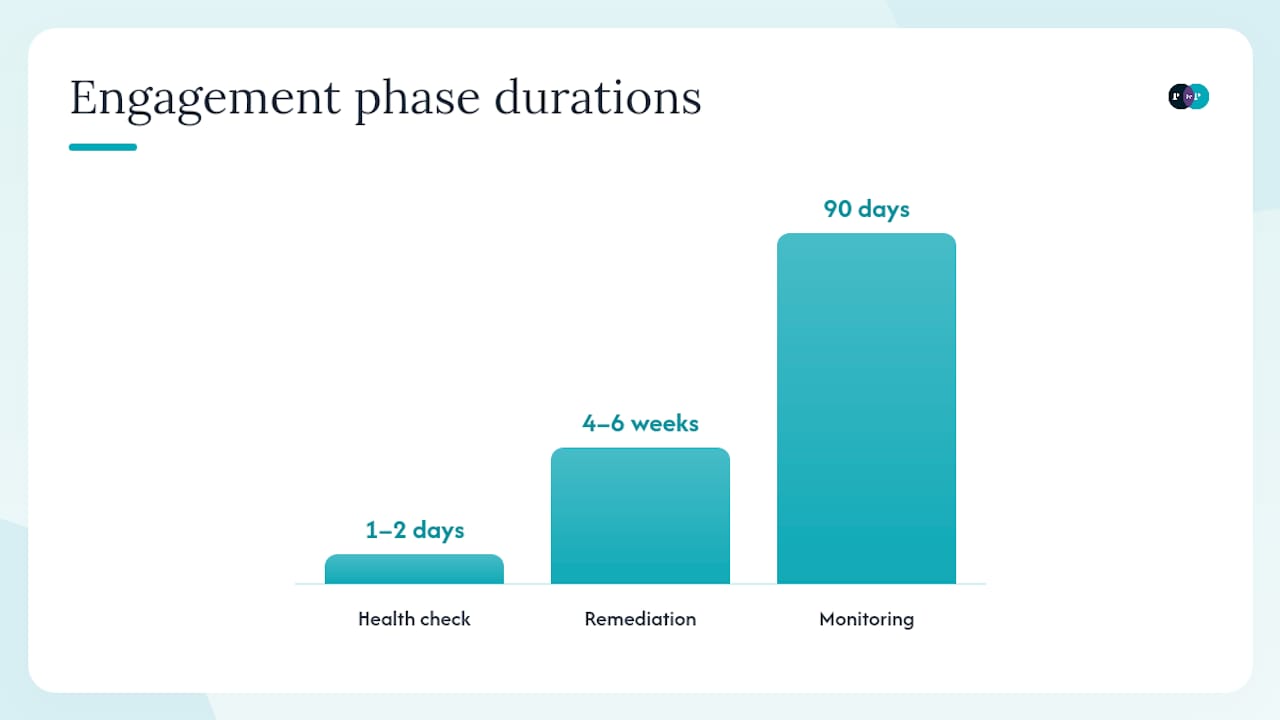
A practical engagement typically runs in three phases: a one to two day health check producing a gap report; a four to six week remediation phase producing updated documents and a compliance calendar; and a 90-day monitoring phase where the adviser checks implementation and prepares the board for the next audit cycle. Fees vary by scope and provider complexity.
A practice note: A medium-sized community services provider engaged a governance adviser after receiving an ACNC query about a Responsible Person notification. The health check found the notification had been missed because no one owned the task. The remediation phase produced a compliance calendar, a notification checklist and a board resolution assigning the task to the CEO with board oversight. The ACNC query was resolved within the required timeframe with no further action.
Onboarding compliance processes for Responsible People, including suitability checks and induction workflows, can also draw on role-specific onboarding frameworks to structure what the board needs to verify at appointment and at each annual review.
Your 90-day governance action plan
Work through these steps in order. Assign an owner to each.
- Commission a governance health check (Chair + CEO, weeks 1–2) — engage an adviser with demonstrated NDIS/aged care/ACNC experience and agree a written scope.
- Review and update the conflicts-of-interest register (Board secretary, week 2) — confirm all current members have disclosed interests and that management plans are documented.
- Check Responsible People suitability (CEO, week 3) — run ASIC disqualification checks for all current board members and document the outcome.
- Confirm notification obligations are current (CEO + adviser, week 4) — verify ACNC Responsible People records, NDIS key personnel notifications and Aged Care Commission key personnel records are up to date.
- Run a board induction or skills refresh (Chair, weeks 4–6) — use the gap report to identify the highest-priority training topics and schedule a focused session.
- Publish a compliance calendar (Board secretary + adviser, week 6) — map all reporting deadlines, notification windows and audit cycles for the next 12 months.
- Review and adopt a board charter (Full board, week 8) — confirm the charter reflects current roles, delegations and decision-making authority.
- Log evidence for audit readiness (CEO, ongoing from week 6) — maintain a register of governance actions, training records and notification confirmations that can be produced at any ACNC, NDIS or Aged Care audit.
- Schedule a 90-day governance review (Chair, week 12) — assess progress against the gap report and update the risk register.
Governance is a system, not a checklist
The boards that attract the least regulator attention are not the ones with the thickest policy folders. They are the ones where governance is wired into how the organisation actually operates: where quality indicator data reaches the board table, where the conflicts register is a live document rather than a filing cabinet artefact, and where the CEO and chair treat notification obligations as a shared standing agenda item.
We see a common mis-step at The Planning and Practice Hub: boards that complete a governance review, update their documents, and then treat the work as done. Governance is not a project with an end date. The accountability and quality system obligations under the Aged Care Quality Standards (Strengthened) make this explicit — the governing body is expected to monitor, report and improve continuously, not annually.
The question worth raising at your next board meeting: does your board currently receive the data it needs to govern, or does it receive a narrative that summarises what management wants it to know?
How The Planning and Practice Hub can help your board
The Planning and Practice Hub works with not-for-profit and human services boards across Australia on governance reviews, compliance calendars and board training. A scoping call takes 30 minutes and produces a clear picture of where your board sits against ACNC, NDIS and Aged Care obligations.
A first engagement typically includes a written governance gap report, an updated conflicts-of-interest register, and a compliance calendar covering your next 12 months of reporting and notification obligations. For boards that need broader support, the management consulting service covers policy development, quality system design and ongoing advisory. Book a scoping call through the services page to confirm scope, timeline and fees before committing to an engagement.
Sources
- Governance standards | ACNC
- NDIS Practice Standards | NDIS Quality and Safeguards Commission
- Provider governance | Aged Care Quality and Safety Commission
- Legislation
- Banned and disqualified registers | ASIC
This article is general information, not a substitute for advice from a qualified lawyer. Consult a qualified legal professional about your own circumstances before acting on anything here.
FAQ
What are the ACNC Governance Standards?
The ACNC Governance Standards are six standards that all registered charities (except Basic Religious Charities) must meet to retain registration. They cover purposes and accountability, board conduct, Responsible People suitability, and — under Standard 6 — National Redress Scheme obligations.
What does the NDIS core governance module require from boards?
The NDIS core module requires a defined governing structure, documented delegations, and documented management of conflicts of interest, proportionate to the size and complexity of supports delivered.
How often should a not-for-profit board review its governance documents?
Governing documents and the compliance calendar should be reviewed at least annually. The conflicts register should be reviewed and updated at every board meeting, whenever members declare or confirm interests.
What is the fastest way to fix a governance gap before an audit?
Commission a governance health check to produce a prioritised gap report, then address the conflicts register and Responsible People notification obligations first — these are the most common audit findings across ACNC, NDIS and Aged Care frameworks.
Can The Planning and Practice Hub help with both NDIS and aged care governance?
Yes. The Planning and Practice Hub works across NDIS, aged care and ACNC frameworks and can scope a governance review that addresses obligations under all three regulators in a single engagement.