TL;DR:
- Most Australian human services organizations lack a pre-approved process for misconduct allegations, risking procedural errors. Hiring an independent investigator ensures impartial, evidence-based inquiries that protect organizations legally and reputationally. Preparing investigation protocols in advance helps organizations respond effectively and maintain compliance.
Why your organisation needs an independent workplace investigator
Most boards in Australian human services have a misconduct policy. Far fewer have a ready, pre-approved process to act on it the moment an allegation lands. That gap is where organisations get into trouble.
An independent workplace investigator conducts impartial, evidence-based inquiries into allegations of bullying, harassment, discrimination, and reportable conduct using specialized HR documents software to establish fair and impartial procedures. In human services, where staff work with vulnerable people and regulatory scrutiny is constant, the stakes of a flawed process are high. The Fair Work Commission focuses on how evidence is gathered and whether respondents had a genuine opportunity to respond, often more than on the factual outcome itself. A procedurally sound investigation protects your organisation whether or not the allegation is substantiated.
Independence matters most when internal relationships cloud impartiality. Under the NDIS Practice Standards, Aged Care Quality Standards (Strengthened), National Principles for Child Safe Organisations, and ACNC Governance Standards, organisations carry explicit obligations around safe, accountable governance. An external investigator delivers the objectivity those frameworks require, and produces defensible documentation that holds up if a matter proceeds to the Fair Work Commission or another tribunal.
Key situations that call for an external investigator:
- Allegations involving a senior leader, board member, or someone close to leadership
- Complaints where internal staff have prior relationships with either party
- Reportable conduct notifications under child safe or disability frameworks
- Any matter where a conflict of interest, real or perceived, could undermine findings
When to engage one, and how to do it well
The most common mistake is waiting until a complaint escalates before thinking about process. Boards that prepare in advance by pre-selecting an investigator and drafting communication templates are far better placed to manage reputational risk when allegations arise.
Consider this scenario: a mid-sized homelessness NFP received a complaint against its operations manager. Because the CEO had a longstanding working relationship with the manager, the board immediately engaged an external investigator rather than attempting an internal process. The investigator completed a structured, confidential inquiry within six weeks, produced findings the board could act on, and the matter did not proceed to tribunal. The pre-existing relationship between the CEO and the respondent, had it gone unaddressed, would have exposed the organisation to a procedural fairness challenge.
Boards often confuse having a written policy with having a competent investigative response. The critical gap is the absence of pre-cleared, immediately actionable investigative procedures — and communication protocols to prevent missteps the moment an allegation is made.
Selecting the right investigator. Look for demonstrated experience in your specific sub-sector, whether that is aged care, NDIS, child safe, or community services. Relevant qualifications include human resources, law, or a government investigations diploma. Membership of a professional body such as the Australasian Association of Workplace Investigators (AAWI) signals commitment to practice standards. Confirm the investigator has no prior relationship with any party to the complaint.
Process and timeline. A well-run investigation typically involves scoping the terms of reference, interviewing the complainant, respondent, and witnesses, gathering documentary evidence, and producing a written findings report. Most straightforward matters conclude within four to eight weeks. Complex or multi-party investigations take longer. Confidentiality obligations apply throughout; parties should receive clear written guidance on what they can and cannot discuss.

Cost and governance integration. Fees vary with complexity, but budgeting for external investigations as a standing governance cost is sound practice for any NFP operating under audit-ready documentation obligations. Embed investigation triggers in your board charter and link them to your regulatory reporting obligations, including mandatory notifications under the NDIS Commission or Aged Care Quality and Safety Commission.
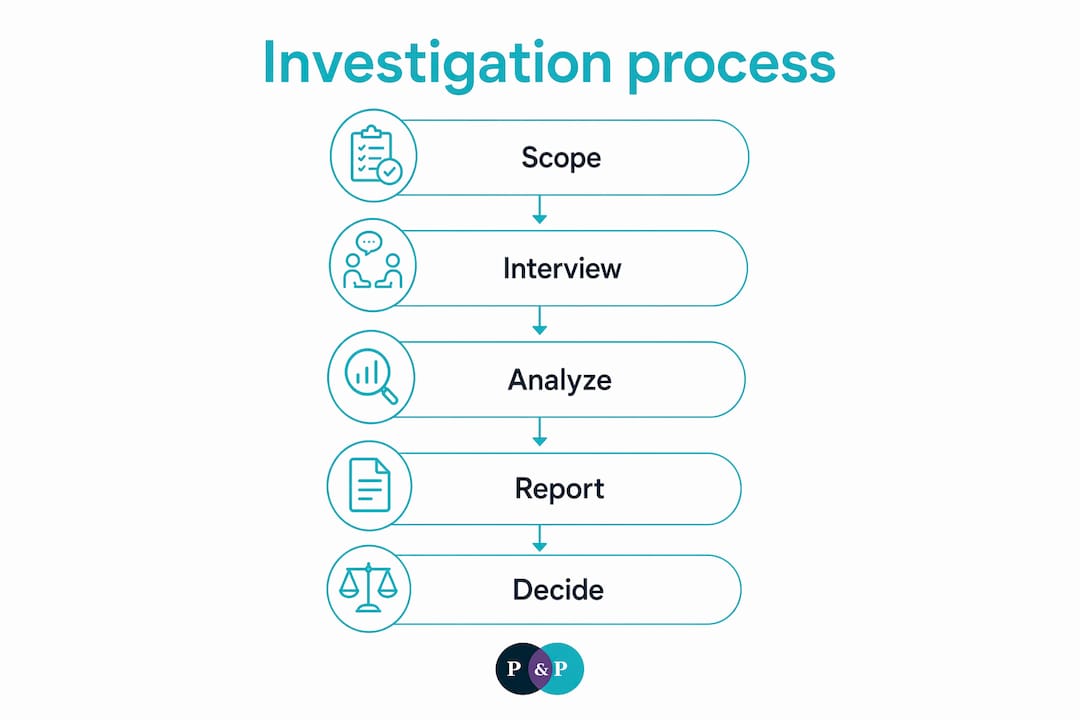
The separation of investigation and decision-making roles is a natural justice requirement. Small organisations often struggle to achieve this internally, which is precisely where an external investigator adds structural value beyond objectivity alone. Good board governance compliance practice means this separation is built into your framework before you need it.
The Planning and Practice Hub supports boards through exactly this
The Planning and Practice Hub works with CEOs and boards across Australian human services, including NDIS providers, aged care organisations, and community services NFPs, to build governance frameworks that hold up under regulatory scrutiny. Founded by Rachel Willis, with nearly three decades of sector experience and alignment across more than 50 regulatory bodies, the Hub helps organisations move from having a policy on paper to having a process that actually works when it matters.
If your board does not yet have pre-approved investigation protocols or a vetted investigator relationship in place, that is the right place to start. Visit the NFP support page to find out how The Planning and Practice Hub can help you build that readiness now, not after an allegation arrives.
FAQ
What does an independent workplace investigator do?
An independent workplace investigator conducts an impartial, evidence-based inquiry into allegations such as bullying, harassment, discrimination, or reportable conduct, then produces written findings the organisation can act on.
When is an external investigator legally required in Australia?
External investigators are not universally mandated by law, but they are strongly indicated when allegations involve senior leaders or when internal conflicts of interest risk procedural fairness, which the Fair Work Commission scrutinises closely.
How long does a workplace investigation typically take?
Most straightforward investigations typically conclude within several weeks; complex or multi-party matters take longer depending on the number of witnesses and the volume of documentary evidence.
What qualifications should I look for in an investigator?
Relevant backgrounds include human resources, law, or government investigations, combined with sub-sector experience in aged care, NDIS, or child safe environments and, ideally, AAWI membership.
How does The Planning and Practice Hub support investigation readiness?
The Planning and Practice Hub works with boards to embed pre-approved investigation protocols and governance frameworks aligned with Australian human services regulatory requirements, so organisations are prepared before an allegation arises.
Key takeaways
Engaging an independent workplace investigator in Australian human services is a governance decision that protects organisations legally, reputationally, and regulatorily, and it works best when the process is established before an allegation arrives.
| Point | Details |
|---|---|
| Independence protects fairness | External investigators remove conflicts of interest, especially critical when allegations involve senior leaders or board members. |
| Process is what tribunals scrutinise | The Fair Work Commission focuses on how evidence is gathered and whether respondents could respond, not just on factual outcomes. |
| Prepare before allegations arise | Pre-selecting an investigator and drafting communication templates reduces reputational risk significantly. |
| Separation of roles is required | Investigation and decision-making must be kept separate to satisfy natural justice obligations. |
| The Planning and Practice Hub | Supports boards in building pre-approved investigation protocols aligned with Australian human services regulatory frameworks. |