
TL;DR:
- A governance and practice partner translates regulatory standards into operational guidance and connects frontline practice with board oversight. They focus on active safeguarding, workforce coaching, and embedding standards into everyday procedures to improve client outcomes and compliance. The role requires practical experience, strategic communication, and authority to escalate systemic risks and driving continuous improvement.
A governance and practice partner is the senior practitioner who translates regulatory and practice standards into day-to-day guidance, measurable governance outcomes, and a clear line of sight between your board and frontline practice. Organisations recruit the role when they recognise that compliance with the NDIS Practice Standards and the NDIS Quality and Safeguards Commission's requirements cannot be managed through policy documents alone.
Boards that commission the role typically expect three immediate outcomes:
- Safeguarding oversight that is active, not retrospective, including restrictive practices monitoring and incident escalation.
- Practice coaching that builds workforce capability rather than simply auditing against checklists.
- Operationalised standards: procedures, briefing tools and supervision frameworks that make the NDIS Practice Standards and Aged Care Quality Standards (Strengthened) real at the point of service.
The Planning and Practice Hub works with boards and executives across NDIS, aged care, child and family, and community services to design and recruit this role. Understanding what it actually does is the first step to getting the hire right.
What does a governance and practice partner do day to day?
The role sits at the intersection of practice leadership and governance accountability. It reports to the Director of Practice or CEO, holds a standing agenda item at the quality committee or board, and spans program types including NDIS, aged care, and child and family services. Contract forms vary: permanent senior manager, fixed-term project appointment, fractional advisory, or secondment. Travel and on-call expectations depend on provider size and geographic spread.
Key responsibilities and core accountabilities
Practice governance and standards translation
- Translates legislative and regulatory requirements into policy, coaching tools, and practice guidance, drawing on the NDIS Practice Standards guidebook and equivalent aged care frameworks.
- Designs and maintains procedures that make standards operational at the point of service, not just on paper.
Safeguarding and incident oversight
- Leads restrictive practices oversight, including authorisation tracking and reduction planning.
- Manages incident reporting obligations and complaints feedback loops, with clear escalation pathways to the executive and board.
Practice improvement
- Conducts practice audits and supervision design across program areas.
- Analyses practice data and prepares board briefings that connect frontline quality signals to strategic risk.
Practice governance is distinct from quality assurance. The partner focuses on whether processes achieve client outcomes, not only whether procedures were followed.
What regulatory frameworks does the role map to?
Australian regulatory requirements specify that governance and operational management systems must be proportionate to provider size and complexity, with qualified staff authorised to oversee quality and safeguarding. The governance and practice partner is typically the person who holds that authority in practice.
The role must map to:
- NDIS Practice Standards — and the NDIS Quality and Safeguards Commission's provider governance indicators (participant rights, provider governance, supports and environments).
Operationalising these frameworks means converting standard-level requirements into procedures, line-of-sight reports, and practitioner-level tools. A standard that lives only in a policy document has not been operationalised. The NDIS Practice Standards include specific provider governance indicators, such as participant contribution to governance (indicator 2.1.1) and integrated strategic planning that considers legislative requirements (indicator 2.1.4), that the partner must make visible to the board.
What skills and experience does the role require?
Essential
- Demonstrated practice governance experience in NDIS, aged care, or child and family services.
- Working knowledge of NDIS Practice Standards and incident management obligations.
- Practice coaching and supervision skills, with evidence of workforce capability uplift.
- Tertiary qualification in a relevant discipline, or equivalent senior practice experience.
Desirable
- Governance training for boards or quality committees.
- Clinical or allied health credentials.
- Experience with Aged Care Quality Standards (Strengthened) and the practice governance standard from the Australian Commission on Safety and Quality in Health Care.
- Lived-experience advisory involvement.
Ask applicants to supply a sample policy, a board briefing paper, and a prior position description. These three documents reveal translation skill faster than any written test.
Where does the role sit in your governance architecture?
| Interface | Nature of relationship |
|---|---|
| Board / quality committee | Standing agenda item; delivers practice briefings and escalates systemic risk |
| CEO / Director of Practice | Direct report; receives strategic direction and executive support |
| Clinical and practice leads | Peer collaboration on supervision design and practice audits |
| HR and complaints team | Coordinates on incident management, investigations, and feedback loops |
| Lived-experience advisory groups | Embeds participant voice into governance processes and reporting |
| NDIS Quality and Safeguards Commission | Primary regulator contact for incident notifications and compliance queries |
Effective governance partnerships create a two-way dialogue: boards use practice data to inform strategic risk, and frontline staff use governance tools to escalate service quality barriers. Treating practice governance as a compliance silo is the most common structural error in the sector.
Hiring checklist and interview questions
Recruiter checklist
- Draft a position description that names the specific standards the role must operationalise.
- Set selection criteria that require demonstrated evidence, not claimed familiarity.
- Request referees from sector or regulatory contexts, not only line managers.
- Ask for a policy document, a board briefing paper, and a prior PD as application evidence.
- Include a short assessment task (see below).
Interview prompts
- "Walk me through a time you translated a regulatory requirement into a practice tool. What did the tool look like and how did you know it worked?"
- "Describe your approach to incident review. How did you brief the board?"
- "How have you involved participants or lived-experience advisors in governance processes?"
Assessment task: Ask shortlisted candidates to draft a one-page board briefing from a set of de-identified incident data. This reveals real translation skill better than any written test, and it mirrors the actual work.
Red flags: Candidates who describe governance only in compliance terms, cannot provide a concrete incident review example, or have no evidence of participant engagement in governance processes.
For NDIS compliance context that boards should understand before hiring, the Hub has published a practical overview.
How do you measure success in this role?
| KPI | What to track |
|---|---|
| Incident reporting timeliness | Percentage of incidents reported within required timeframes |
| Practice coaching coverage | Proportion of practice teams with an active coaching plan |
| Board briefing quality | Number of briefings containing practice data linked to strategic risk |
| Complaints closure | Average days to close a complaint within policy timeframe |
| Restrictive practice reduction | Trend in authorised restrictive practice incidents over rolling quarters |
Outcomes to track include improved practice reliability across program areas, reduced restrictive practice incidents, and stronger participant involvement in governance. A monitoring dashboard built from these indicators gives the board a genuine line of sight, not a compliance snapshot.
Salary, contract types, and recruitment timeline
Common contract forms are permanent senior manager, fixed-term project appointment, fractional advisory, and secondment. Salary bands vary by sector, location, scope, and whether clinical credentials are required; organisations should benchmark against current SCHADS Award classifications and sector salary surveys before advertising.
A realistic recruitment timeline: two weeks for PD drafting and approval, two to three weeks for advertising and shortlisting, one week for assessment tasks, one week for interviews and reference checks, then four to eight weeks for notice periods. Allow twelve to fourteen weeks from decision to start date for a senior hire.
A practice example: from inconsistent reporting to board-level visibility
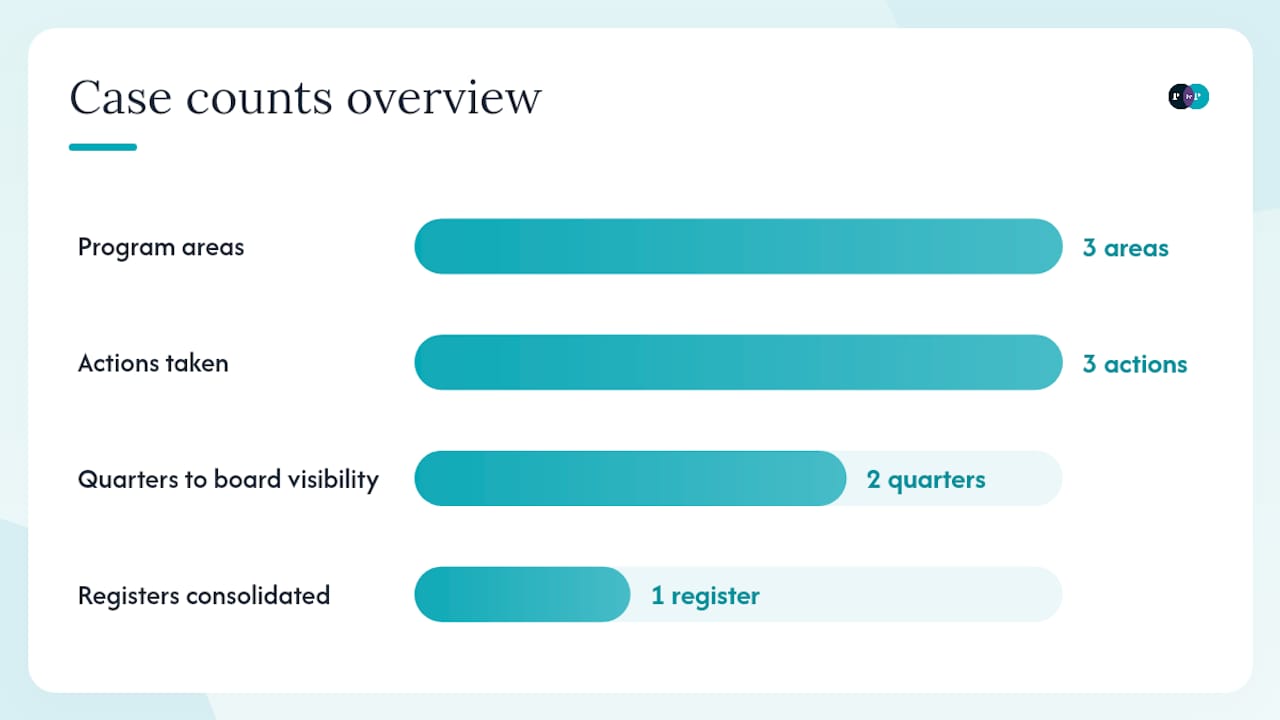
A mid-sized NDIS provider in regional New South Wales had inconsistent incident reporting across three program areas. Incidents were being recorded, but the data was not reaching the board in a form that supported decision-making, and restrictive practice authorisations were tracked in separate spreadsheets with no central oversight.
The governance and practice partner appointed on a fixed-term basis took three actions:
- Rewrote the incident management policy to align with NDIS Quality and Safeguards Commission notification requirements and created a one-page practitioner guide.
- Designed a monthly board briefing template that translated incident data into practice risk categories.
- Introduced fortnightly practice supervision for team leaders, with a structured agenda tied to the briefing template.
Within two quarters, the board was receiving consistent, actionable practice briefings. Restrictive practice authorisations moved to a single register with a quarterly reduction target. The organisation's next NDIS audit noted the improvement in governance documentation.
Continuous professional development for governance roles
The governance and practice partner role sits at the edge of practice and policy, which means CPD must span both. Effective practitioners maintain currency in regulatory changes through the NDIS Quality and Safeguards Commission's provider updates, the Aged Care Quality and Safety Commission's reform communications, and sector bodies such as ACWA, NDS, and ACSA.
Beyond regulatory literacy, the role benefits from formal governance training. The Australian Institute of Company Directors (AICD) offers governance programmes relevant to non-profit boards, and the Community Directors Council provides sector-specific resources. Practice supervision training, particularly models grounded in reflective practice, builds the coaching capability the role demands.
Stakeholder engagement and communication strategies
The partner's credibility depends on being trusted by both the board and the frontline. That requires different communication registers for different audiences. Board briefings need to be concise, risk-framed, and tied to strategic decisions. Practice team communications need to be concrete, jargon-light, and grounded in day-to-day work.
Participant and lived-experience engagement is not optional. The NDIS Practice Standards include participant contribution to governance as a specific indicator. Building a lived-experience advisory mechanism into the governance calendar, rather than consulting ad hoc, is the difference between compliance and genuine co-design.
Technology and digital tools in governance practice
Digital tools do not replace governance judgement, but they do make the line of sight between practice and board more reliable. Incident management platforms such as Riskman and Brevity Care Software are used across the NDIS sector to centralise reporting and generate the trend data a partner needs for board briefings. Quality management systems that integrate policy libraries, audit schedules, and staff acknowledgement records reduce the manual overhead of compliance tracking.
When scoping a compliance project, defining what the technology must do before selecting a platform avoids the common mistake of buying a system that generates reports nobody reads. The partner should own the governance data architecture, not just consume the outputs.
Key takeaways
A governance and practice partner is effective only when the role has a genuine line of sight to the board, clear KPIs tied to NDIS Practice Standards and Aged Care Quality Standards (Strengthened), and active participant involvement in governance processes.
| Point | Details |
|---|---|
| Define the regulatory scope first | Name every standard the role must operationalise before drafting the position description. |
| Use an assessment task in recruitment | A one-page board briefing from incident data reveals translation skill faster than interviews alone. |
| Build a KPI dashboard from day one | Track incident timeliness, coaching coverage, and board briefing quality from the first quarter. |
| Embed participant voice structurally | Lived-experience advisory involvement is an NDIS Practice Standards indicator, not a nice-to-have. |
| The Planning and Practice Hub | Supports boards with governance advisory, PD development, and short assessment design for this role. |
What we see boards get wrong about this role
Most boards that struggle with practice governance have not failed to hire the right person. They have failed to give that person the right architecture. A governance and practice partner without a standing board agenda item, without access to practice data, and without authority to escalate is a quality manager with a different title.
The line of sight between practice and board decisions is not created by the partner alone. It is created by a board that actively asks practice quality questions, not only financial ones. After nearly 30 years working in and alongside Australian human services organisations, that is the single most consistent gap we see at The Planning and Practice Hub.
So here is the question worth sitting with: when your board last reviewed practice data, did it lead to a governance decision, or did it stay in the quality committee?
How The Planning and Practice Hub supports governance and practice recruitment
The Planning and Practice Hub works with CEOs, boards, and quality managers across Australian human services to design governance and practice partner roles that are fit for purpose from day one. That includes drafting position descriptions mapped to the NDIS Practice Standards and Aged Care Quality Standards (Strengthened), developing selection criteria and assessment tasks, and providing governance advisory during the transition period when a new partner is establishing the role.
If you are preparing to recruit or commission this role, the human services consulting page outlines how we work and what a scoped engagement looks like. Get in touch to discuss your organisation's specific governance architecture and what the role needs to achieve.
Useful sources
- NDIS Practice Standards — NDIS Quality and Safeguards Commission
- Practice governance standard • Australian Commission on Safety and Quality in Health Care
- Legislation (NDIS-related regulatory text)
- Embracing Change: NDIS Practice Standards Guidebook • MHCC
- How practice governance can drive quality improvement • Parenting Research Centre
- Practice Integrity & Governance Partners x2 – Job in Sydney
FAQ
What is a governance and practice partner in human services?
A governance and practice partner is a senior practitioner who translates regulatory standards, including the NDIS Practice Standards and Aged Care Quality Standards (Strengthened), into operational procedures, coaching tools, and board-level reporting. The role connects frontline practice quality to board governance decisions.
What does practice governance mean in the NDIS context?
Practice governance in the NDIS context means establishing systems that give the governing body a clear line of sight to practice quality, participant safety, and incident trends, as required under the NDIS Practice Standards provider governance indicators.
What are the key principles of good governance in human services?
Good governance in human services combines accountability, participant involvement, transparent decision-making, and active board oversight of practice quality, not only financial performance. The practice governance standard from the Australian Commission on Safety and Quality in Health Care identifies workforce understanding and consumer partnership as core elements.
How do you choose a governance and practice partner?
Use a short assessment task, such as drafting a one-page board briefing from de-identified incident data, alongside targeted interview questions about practice translation and incident oversight. Request evidence of prior policy work, board briefing papers, and sector referee contacts.
How is practice governance different from quality assurance?
Practice governance focuses on whether processes achieve client outcomes; quality assurance focuses on whether procedures were followed. The governance and practice partner role spans both but is anchored in outcome accountability rather than procedural compliance alone.